

Play 4 Keeps
BY GREY AREA COLLECTIVE
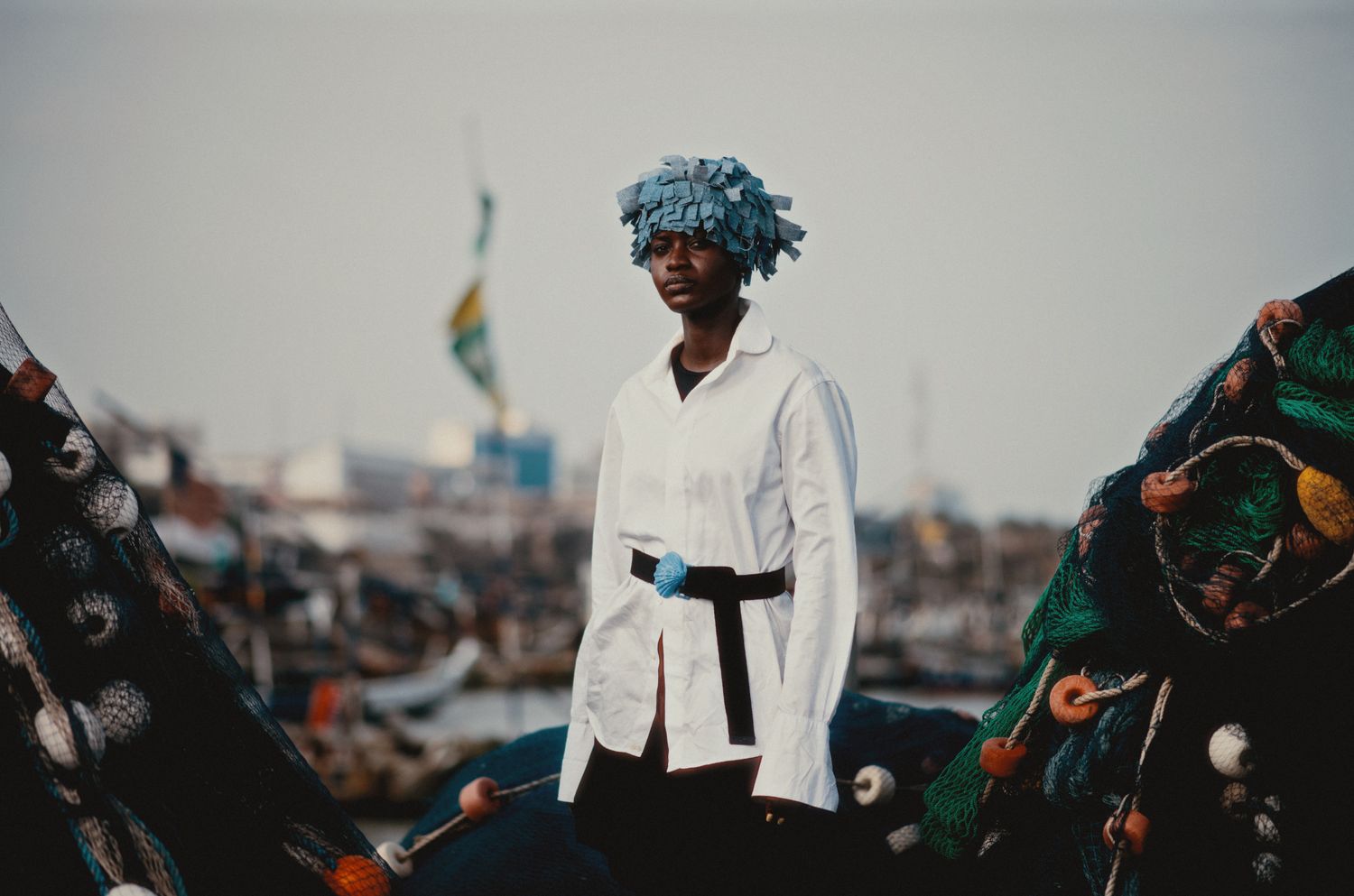
Play for Keeps is a collaboration between Grey Area Studios Ghana and Kwamena Boison, co-founder of The Revival Earth. It shows how discarded plastic bottles can become useful, beautiful objects that keep fashion’s circular economy moving. Kantamanto, one of the world’s largest second-hand clothing markets, is central to Accra’s upcycling culture. Upcyclers there turn discarded garments into new pieces, but they often lack the small parts that finish a design: shirt buttons, belt hooks, bag buckles. We set out to close that gap. We collect plastic bottles, process them into 3D printing filament, and print functional accessories and hardware from the recycled material. These include belt hooks, buttons, shoe charms, bag charms, and sculptural pieces. Waste becomes the missing component that lets another piece of waste become a garment. (Our recycled-plastic products also serve other sectors, but this submission focuses on fashion.). We shot the project on Jamestown beach, where plastic pollution and daily coastal life meet. The forms of the products draw on sea creatures, and the design process draws on Adinkra symbols:
- Asaase Yɛ Duru (“the earth is heavy”) honors the earth and our duty to protect it.
- Sankofa (“go back and fetch it”) is about learning from the past and reusing what has been discarded.
- Adinkra Hene (“king of Adinkra symbols”) stands for the strength of leadership and identity.
Together, these symbols embed cultural memory, resilience, and leadership in the work. They ground the designs in Ghanaian philosophy while giving them a contemporary visual language. The title, Play for Keeps, is about commitment. Recycling should not be a gesture or a trend.
It should be a system we take seriously, one where materials stay in use, and local makers have the tools to build it themselves. The images show that a plastic bottle from the shoreline can become a charm on a bag or a button on a shirt, and that the loop can be closed locally, creatively.
WHAT ARE YOUR HOPES AND FEARS AS A YOUNG PERSON IN A TIME OF ECOLOGICAL CRISIS?
I grew up in a time when the ecological crisis was already part of everyday life. Climate change, pollution and biodiversity loss have always been part of the world I know. My fear is that we gradually accept what should remain unacceptable, and learn to live with environmental degradation. I believe individual actions matter, but they cannot carry the weight of a systemic problem. The greatest changes have to come from the systems that organise our economies, production and consumption. I expect policy-makers to listen to science and to people directly affected by environmental change, and to make decisions that match the scale and urgency of the crisis. What frustrates me is seeing short-term economic interests repeatedly take priority over the long-term conditions that make life possible. My fear is that we have already begun to adapt to environmental degradation instead of questioning what is causing it.At my own scale, I try to question my consumption and avoid what is unnecessary, while recognising that these actions remain limited. As an artist, I cannot solve the ecological crisis, but I can contribute to how we perceive it. Photography allows me to document transformations, and create a space for attention and questioning. My hope is that we stop adapting to environmental degradation and start questioning its causes. The urgency is now.