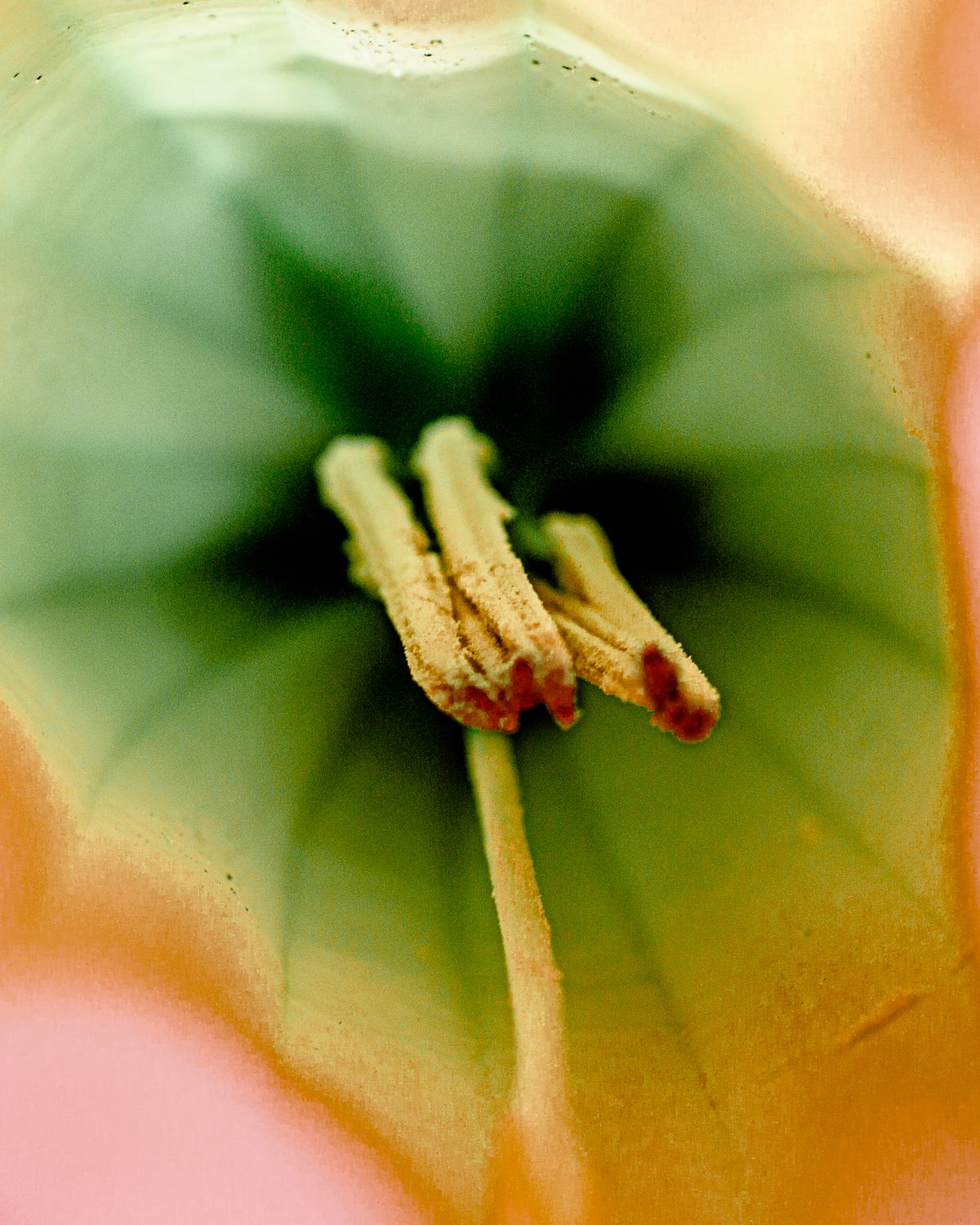
With Les Éternels Éphémères, I explore a world that is both sublime and violent, where beauty always seems to contain the possibility of its own disappearance.
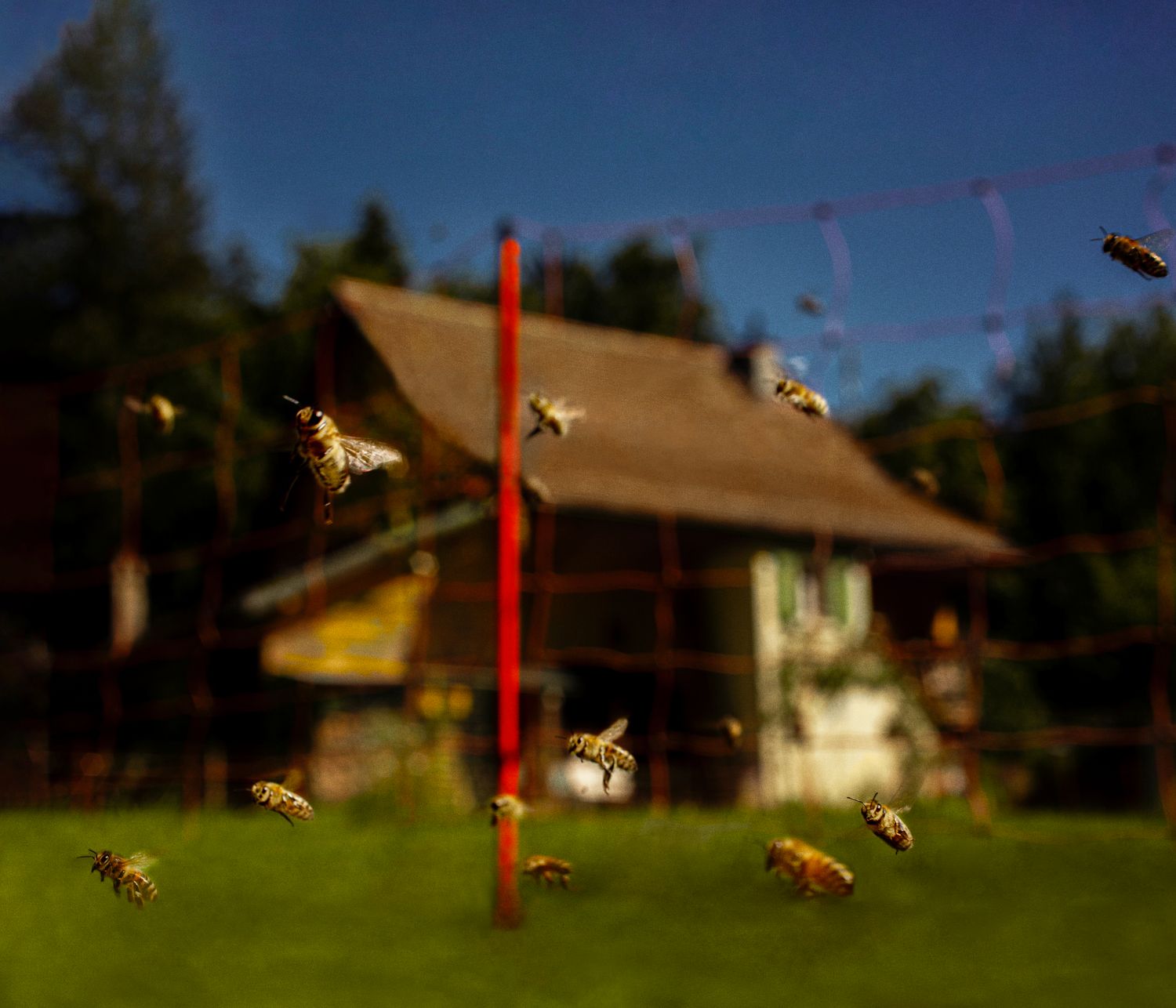
The series has its origins in my childhood in Brittany. My grandfather was a beekeeper and kept several hives. I grew up around bees, watching them forage, fascinated by the precision of their dances, their colours, their smell, and the almost perfect sense of harmony they seemed to embody. But I also remember hives being left inexplicably empty. From an early age, fascination and concern became intertwined in the way I looked at them.
Years later, confronted with the decline of bee populations and Colony Collapse Disorder (CCD), I wanted to return to these memories and to this contradictory feeling. I was not interested in creating a documentary project, but rather a photographic poem or essay around this disappearance.
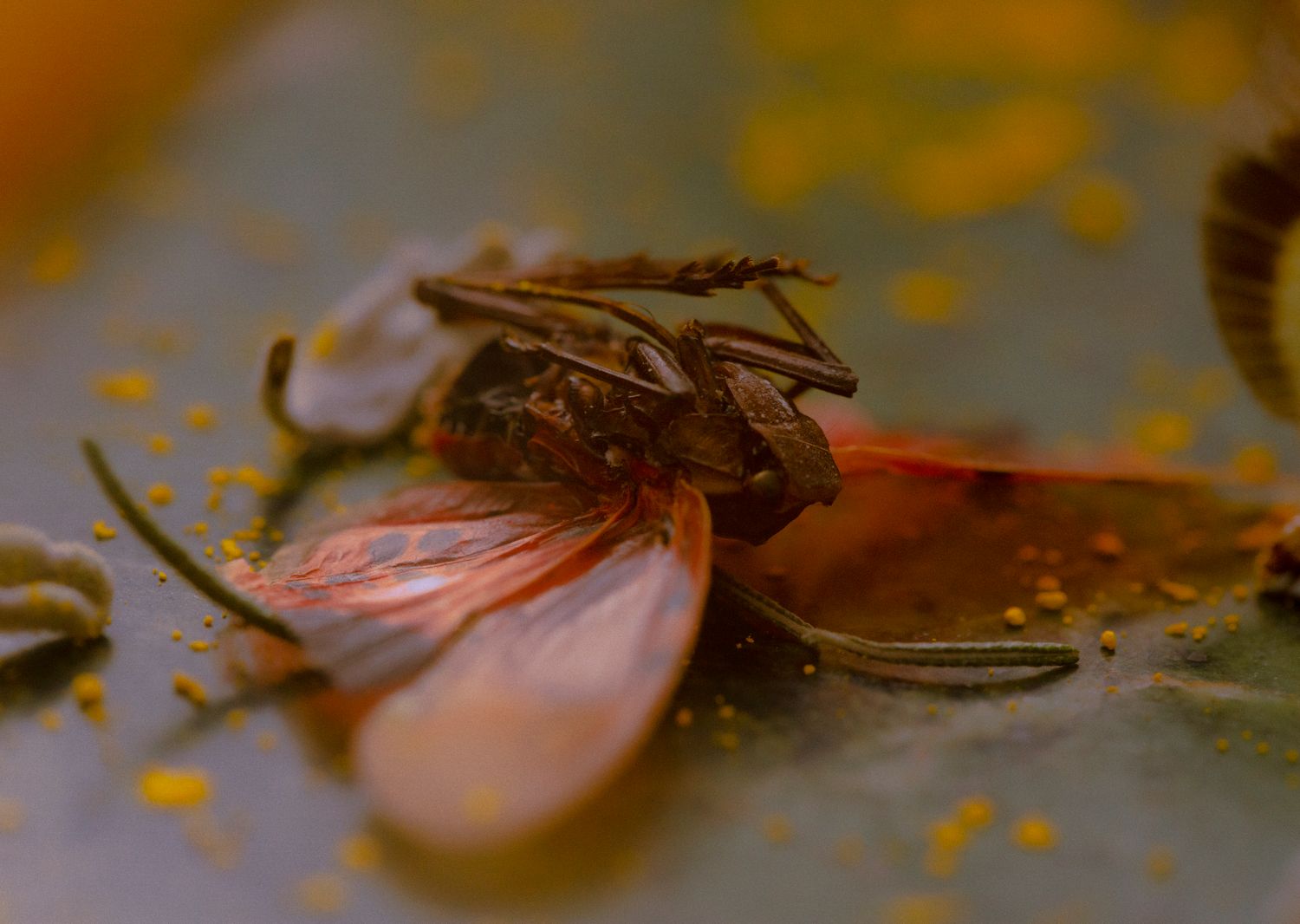
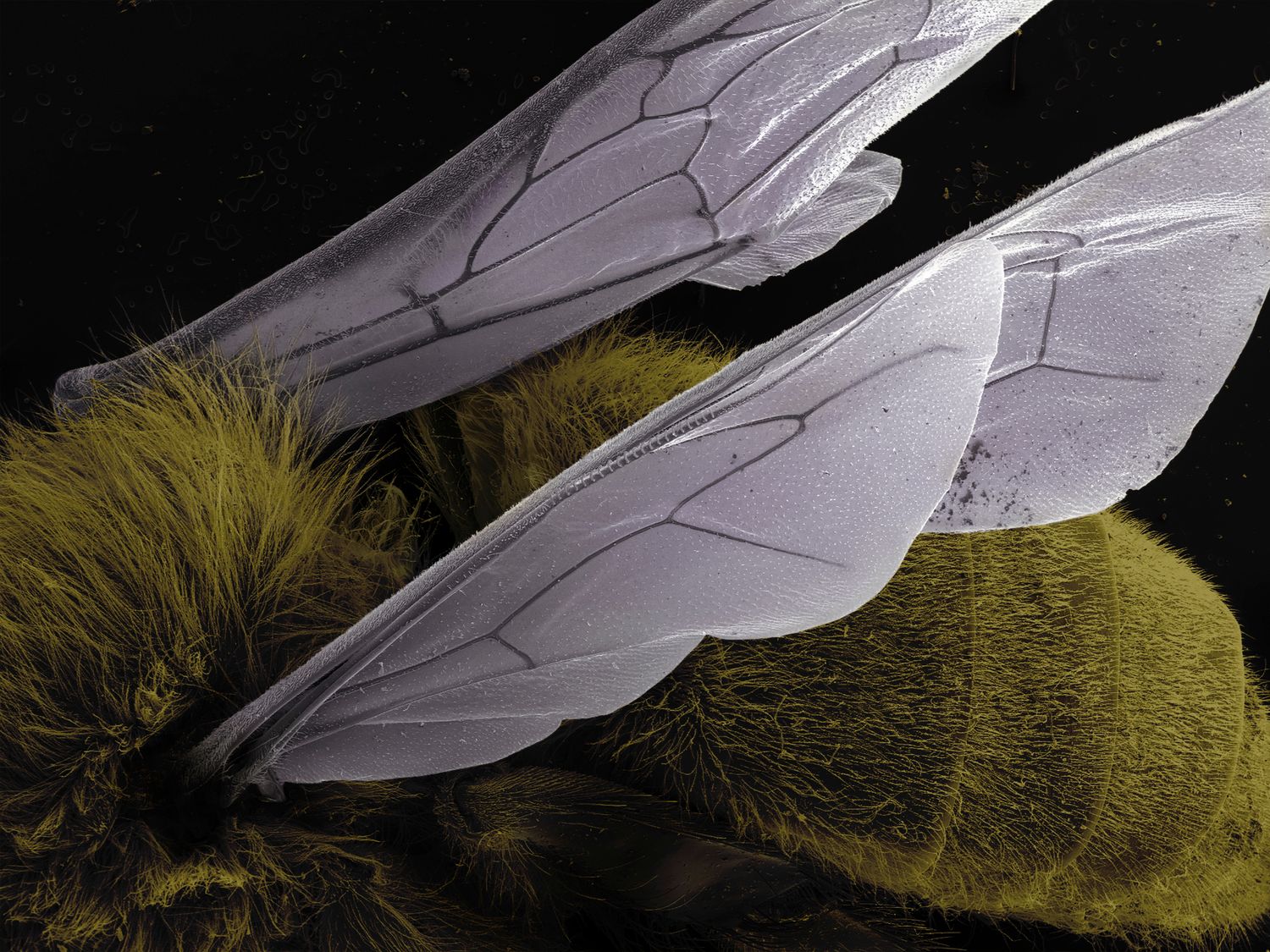
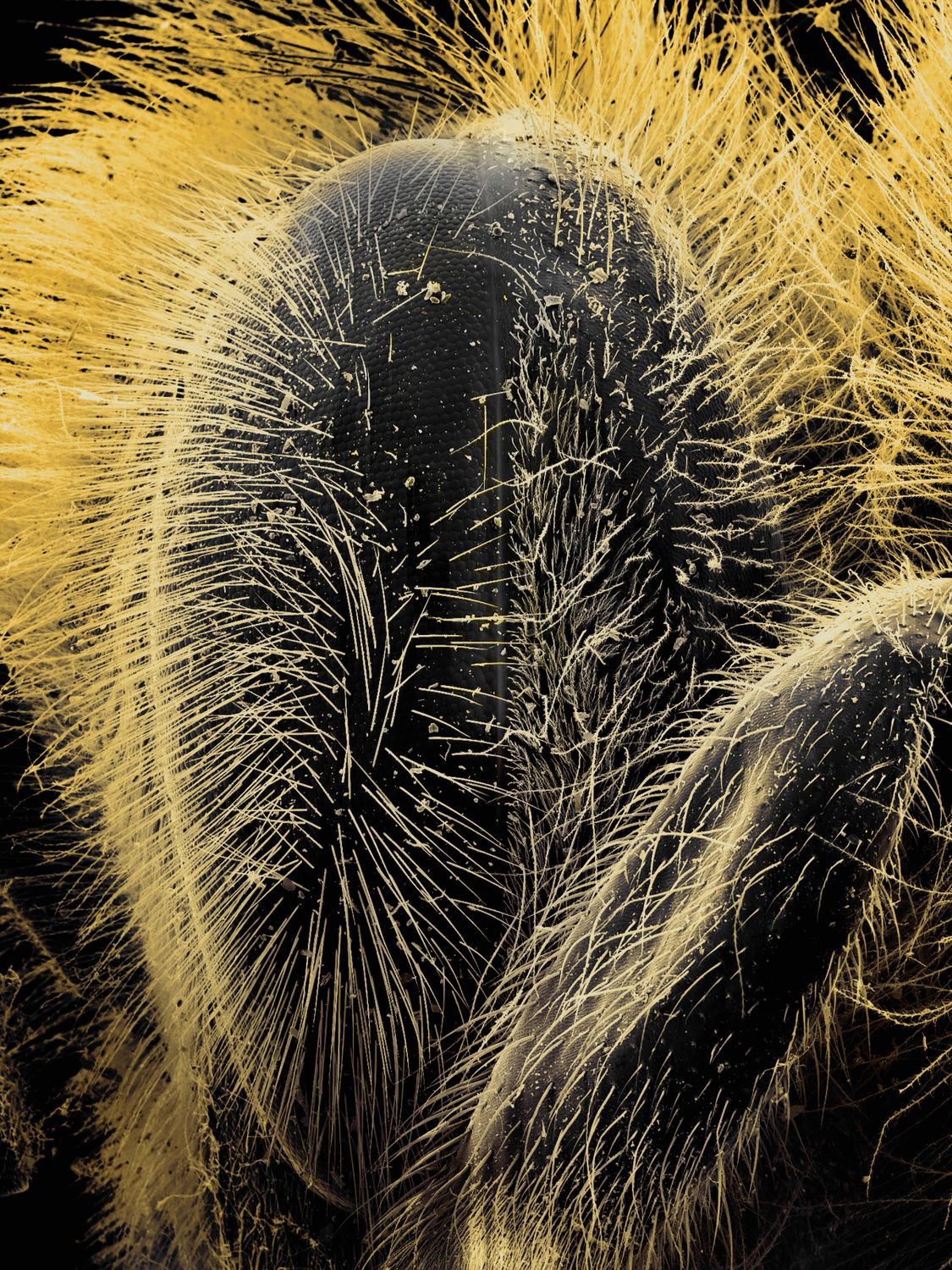
I began with reality and gradually transformed it. Through photography, microscopy, colour and shifts in scale, I moved closer to bodies, flowers and their textures until they became almost abstract. At times, bees appear almost like jewels, covered in gold by pollen or caught in reflections of light; elsewhere, they become tiny, lifeless bodies, almost indistinguishable from fragments of dried flowers.
I wanted to create images that are seductive, almost unreal, while allowing something unsettling to remain beneath the surface. A kind of poisoned beauty, where the sublime and the repulsive can coexist.
By enlarging what is usually tiny, I also want to question the relationships we build with the living world. The relationship between the bee and the flower is one of mutual dependence: attraction becomes exchange, and both participate in each other’s survival. Our own relationship with bees is more contradictory. We depend deeply on them, while at the same time controlling, exploiting and transforming the environments they depend on. This raises a broader question for me: what would it mean to think of our relationship with other species in terms of reciprocity rather than use?
Les Éternels Éphémères emerged from these tensions: between wonder and disappearance, attraction and violence, intimate memory and collective ecological concern.