

Mission: Emission
BY MATTHIEU ROBIN
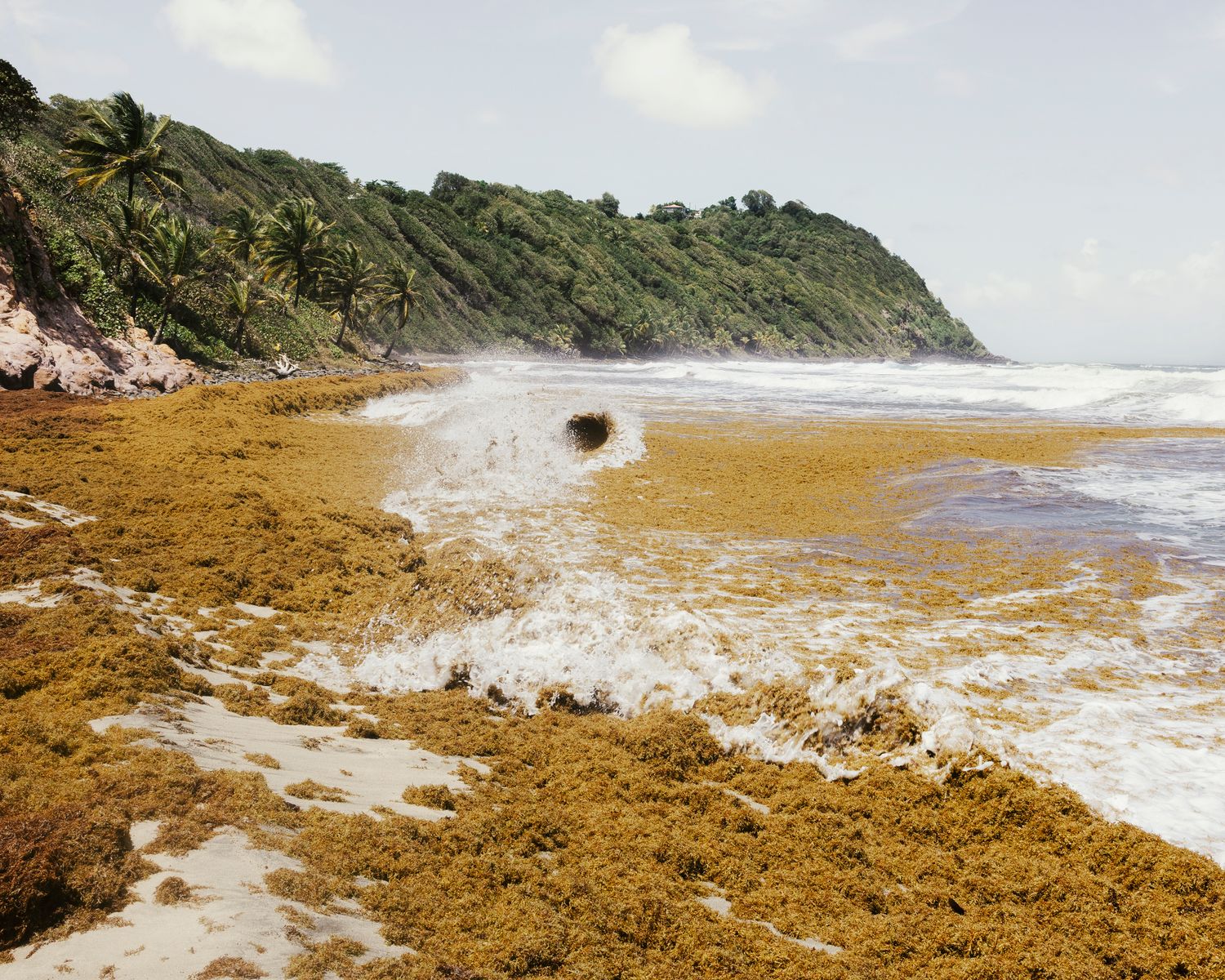
Matière Brune is a photographic project about the proliferation of sargassum seaweed in Martinique and the environmental, health and human consequences of this phenomenon.
Since 2011, the sargassum belt, stretching more than 8,800 kilometres from the West African coast to the Caribbean and the Gulf of Mexico, has affected more than forty countries and territories across the tropical Atlantic. In Martinique, these brown algae have become a lasting presence along the coastline. Their impact lies not only in their accumulation, but in what happens as they decompose: hydrogen sulphide and ammonia are released, affecting living conditions, human health and materials.
I document the phenomenon through landscapes, areas affected by strandings and inhabited spaces, while meeting those who observe, experience or attempt to contain it: inhabitants, workers, scientists and institutions. The project brings together different ways of looking at the same phenomenon: lived experience, observation and scientific measurement.
The scientific dimension is an important part of the project. Researchers and local actors observe and measure the phenomenon in order to understand its evolution and effects. Their methods reveal aspects of the territory that are not always visible to the eye, and became part of the way I approached the subject.
At the same time, I question the position of photography itself. I immerse negatives in decomposing sargassum, allowing the organic matter to alter the film and leave physical traces on the image. The negative becomes a surface of contamination.
The project therefore moves between two approaches: documenting an environmental transformation and allowing that transformation to act upon the photographic process. Matière Brune explores how photography can register not only what an environment looks like, but also something of what it does and how it affects the materials and bodies that encounter it.
WHAT ARE YOUR HOPES AND FEARS AS A YOUNG PERSON IN A TIME OF ECOLOGICAL CRISIS?
I grew up in a time when the ecological crisis was already part of everyday life. Climate change, pollution and biodiversity loss have always been part of the world I know. My fear is that we gradually accept what should remain unacceptable, and learn to live with environmental degradation. I believe individual actions matter, but they cannot carry the weight of a systemic problem. The greatest changes have to come from the systems that organise our economies, production and consumption. I expect policy-makers to listen to science and to people directly affected by environmental change, and to make decisions that match the scale and urgency of the crisis. What frustrates me is seeing short-term economic interests repeatedly take priority over the long-term conditions that make life possible. My fear is that we have already begun to adapt to environmental degradation instead of questioning what is causing it.At my own scale, I try to question my consumption and avoid what is unnecessary, while recognising that these actions remain limited. As an artist, I cannot solve the ecological crisis, but I can contribute to how we perceive it. Photography allows me to document transformations, and create a space for attention and questioning. My hope is that we stop adapting to environmental degradation and start questioning its causes. The urgency is now.