

River Give Us Lands
BY PAROSH MUHAIMIN
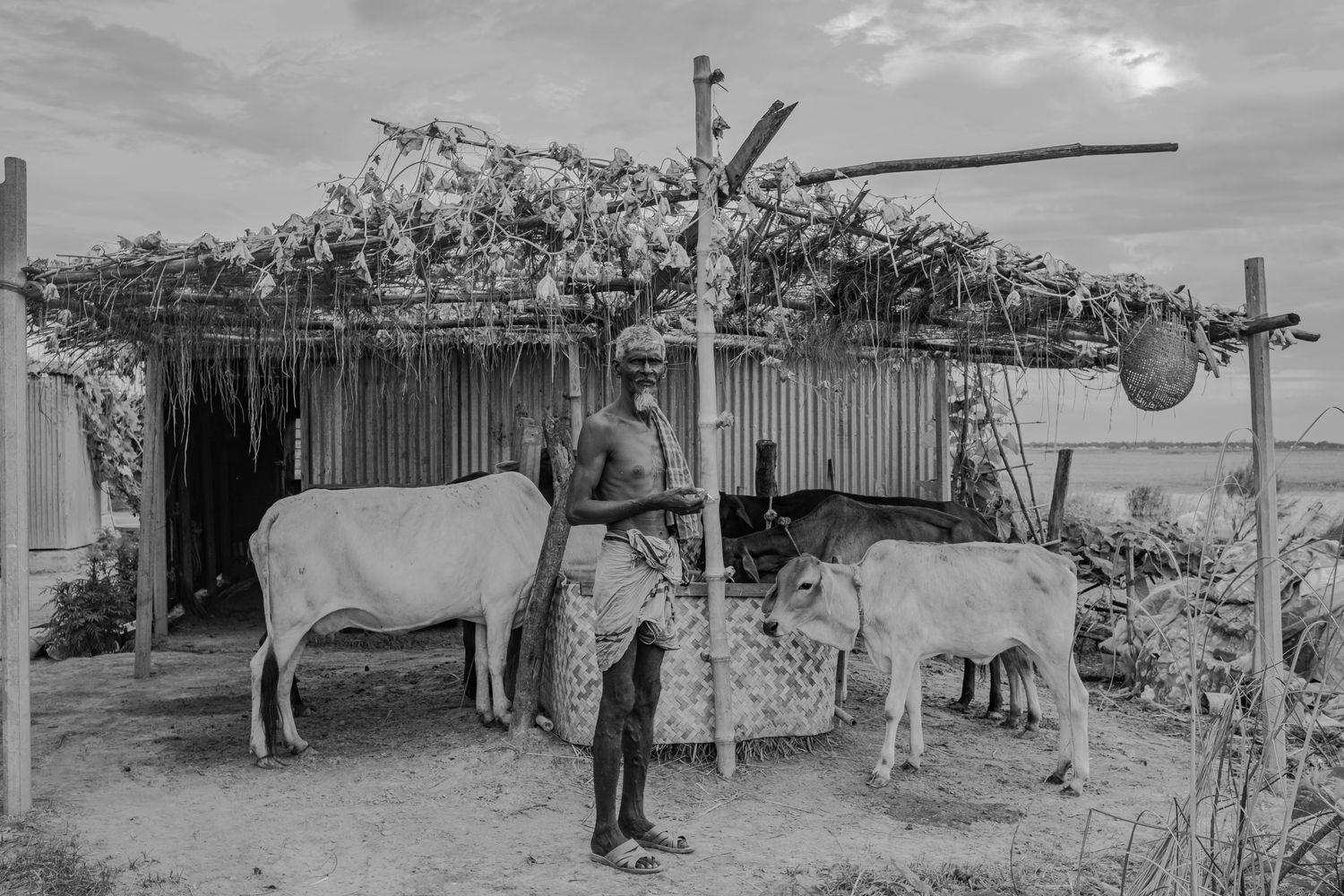
Born in Khulna , I had to cross the Padma river every time I went to visit my relatives in Dhaka. Before the 6.15 km length of bridge , we rode a ferry to reach the other side . While on the ferry I always distanced myself from the fellow passengers and vendors so that I could surrender myself to the slightly terrifying beauty of the river uninterrupted . There was water everywhere with no view of the other side. A tiny fishing boat or a big cargo ship all felt very small in this vastness but what amazed me most was the little houses and cows and people I saw living in the middle of this river in a char .
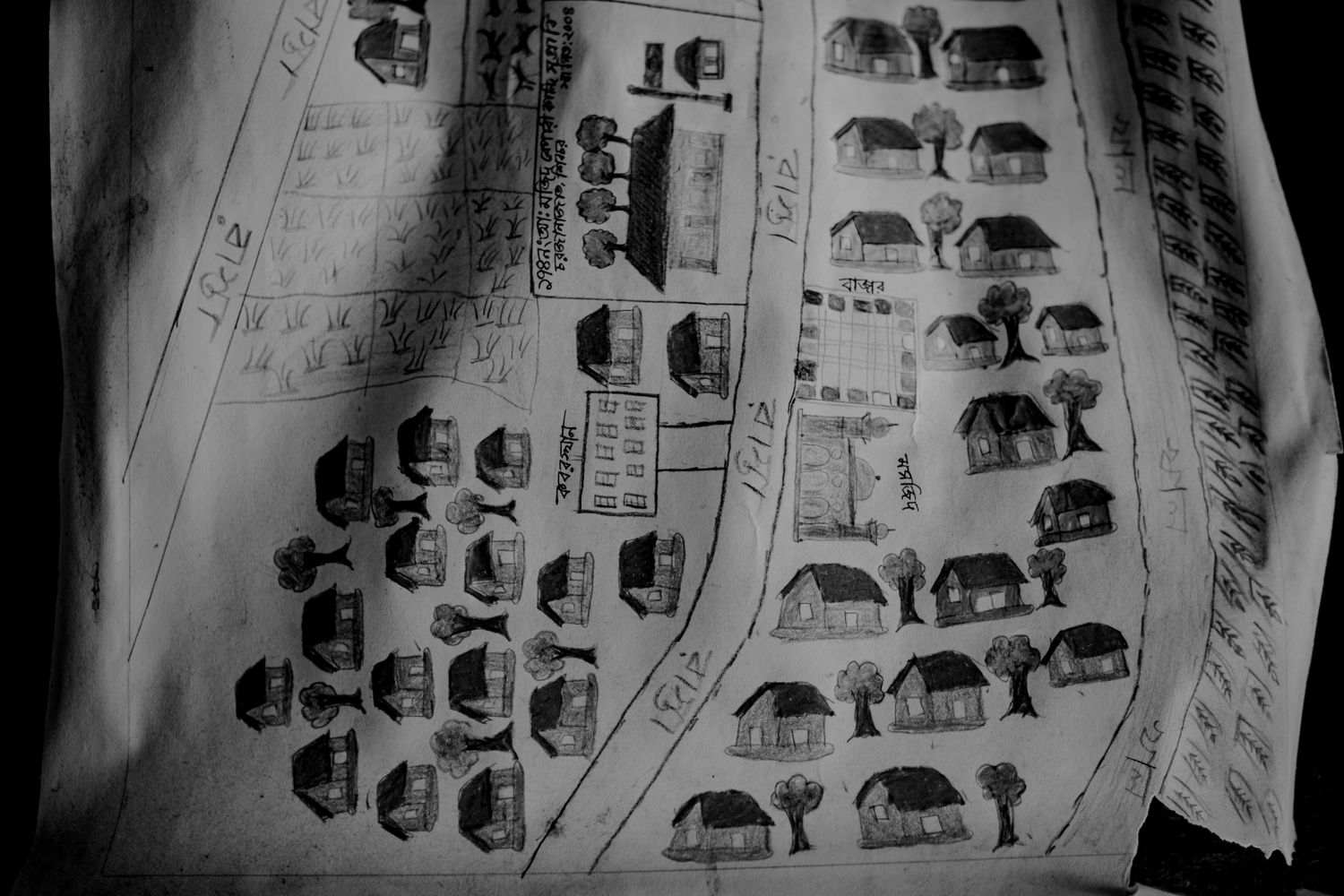
Char is a Bengali word that refers to temporary sandbars and new lands emerging on a riverbed formed by sedimentation, only to be eroded , reshaped and washed away again. The ground beneath the feet of people living in a char is not fixed, it is made of unconsolidated sediment. Thus they design their home and live life knowing this land will disappear and another one will come up from the river. Families displaced from an eroded char , resettle and inhabit a new one within the same river stretch. Movement and mobility is what is permanent in their world of impermanence. Physical anchors of memories where they were born or their parents are buried get erased by the river . But they carry the stories their whole life as they carry the wall of a dismantled house upon their shoulder. Their sense of belonging survives the physical erasure of their land.
In 1825, the British East India Company created a legal logic and framework to deal with Bengal’s impermanent lands which Bangladesh still applies today. It translates the river’s continuous act of making and unmaking into rules of dispute and ownership. Yet the people of Chars are bound to an unwritten contract with the river , and the state can merely witness it.
From the ferry, I saw little houses on a sandbar in the middle of the river. After I entered into a char I saw they are home built to move .
WHAT ARE YOUR HOPES AND FEARS AS A YOUNG PERSON IN A TIME OF ECOLOGICAL CRISIS?
I think of the ecological crisis less as a warning more as something I grew up with. Growing up in Khulna- a city in southwest coastal Bangladesh, I have seen climate refugees coming from coastal villages after losing their home to rising water. Now they are living in the slums of the city. Deprived and lost. My fear is not only that ecological crises will become more severe but that we will become customary to living with them as if they are inevitable. At the same time I get my hope from the river and landscape I am surrounded by. The river destroys land, erodes it but also recreates. The flood water carries silt and sediment from the Himalayas and creates new grounds when winter comes. Completely new fertile lands that provide food and shelter for displaced families. And people for generations adapted to this cycle of erosion and land formation. What I expect from policy-makers is not simply promises of protection, but policies that recognise how people actually live with ecological change. My photography practice is based on allowing myself to stay with places and people long enough to see beyond the familiar images of disaster—to look at ecological crises through local knowledge, memory, attachment, movement and the ways people continue to live.