

Where We Remain
BY REZA SAIFULLAH
In late November 2025, Tropical Cyclone Senyar formed near the equator and triggered widespread flooding and landslides across several countries in Southeast and South Asia. In Indonesia, the disaster is estimated to have directly affected more than 3.3 million people. According to the National Disaster Management Agency, at least 1,204 people were confirmed dead, and 140 remained missing. Homes, farmland, roads, and livelihoods disappeared beneath floodwaters, mud, and massive piles of timber carried by the current. As media attention faded and emergency response ended, thousands of survivors remained among the ruins, facing the difficult task of rebuilding their lives.
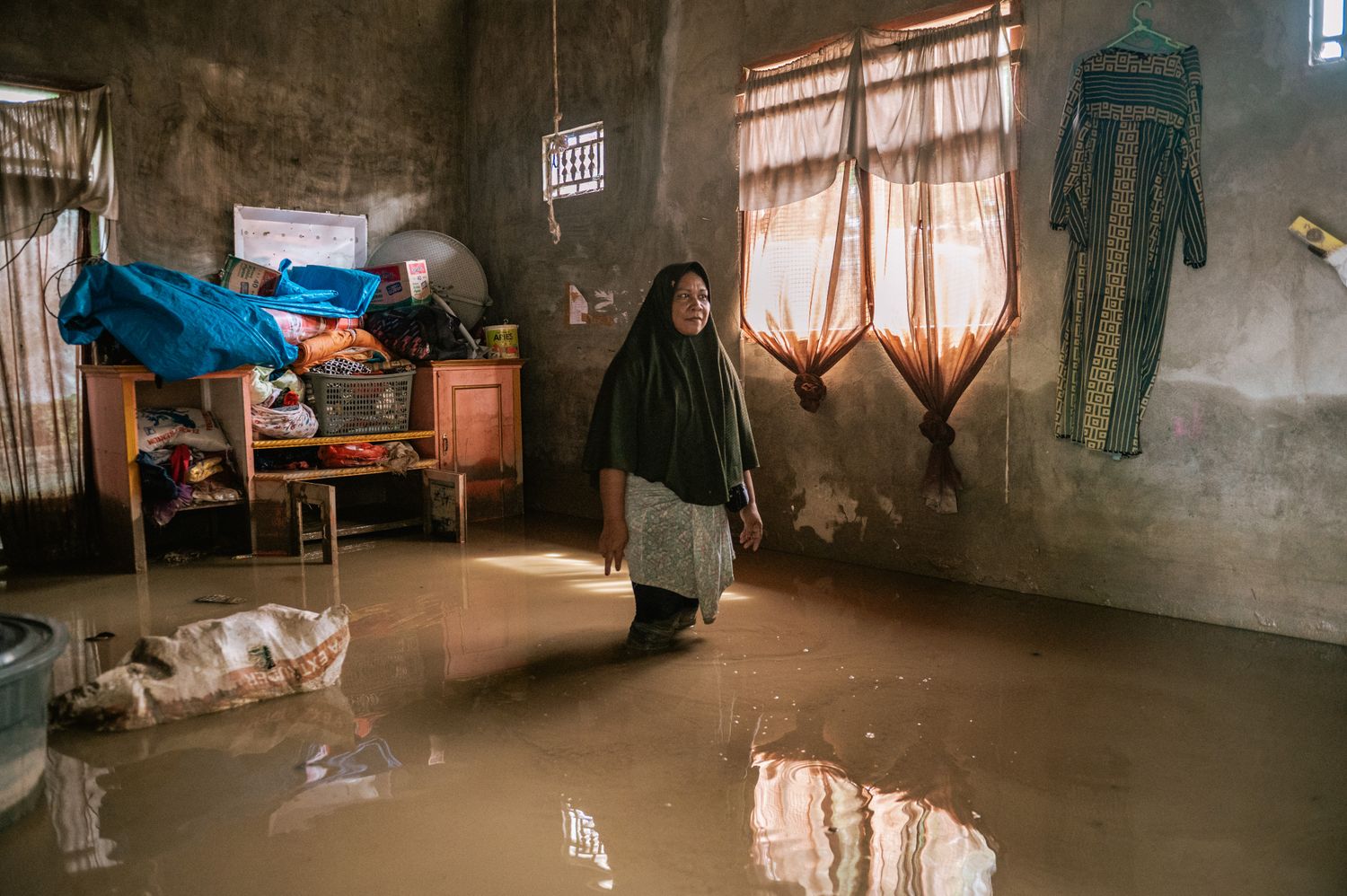
Where We Remain is a documentary project that focused on the Aceh region between late 2025 and 2026. The project examines what remains after the floodwaters recede; through environmental portraits, it follows families, couples, and individuals who continue to live on the land they once called home, even when their houses have been destroyed, buried, or left uninhabitable. Each portrait is made in the place where loss occurred. These locations are more than settings; they are evidence of memory, belonging, and the enduring relationship between people and place.
For many survivors, the disaster meant more than losing a house. Farmers lost productive land, small business owners lost their income, and countless families continue to live with uncertainty as they struggle to recover economically and emotionally. Yet despite these hardships, many choose to remain. Leaving is often impossible, but staying is also an act of resilience, preserving identity, community, and a connection to the land that has shaped their lives for generations.
By placing people within landscapes transformed by disaster, the project explores how identity becomes inseparable from place. Rather than portraying survivors as victims, Where We Remain presents them with dignity and agency, revealing that even when homes are reduced to ruins, the bond between people and the places they call home continues to endure.
WHAT ARE YOUR HOPES AND FEARS AS A YOUNG PERSON IN A TIME OF ECOLOGICAL CRISIS?
Growing up in Indonesia, I have seen climate-related disasters become increasingly frequent and severe. My greatest fear is not only the disasters themselves, but how quickly they fade from public attention while affected communities continue living with their consequences for years. I hope policy-makers invest more in climate adaptation, ecosystem protection, and long-term recovery, while involving local communities in decisions that shape their future. As a photographer, I choose to work slowly, building relationships with the people I document rather than only photographing moments of crisis. I believe photography cannot stop climate change, but it can preserve memory, encourage empathy, and remind us that behind every disaster are people whose lives continue long after the headlines disappear.