

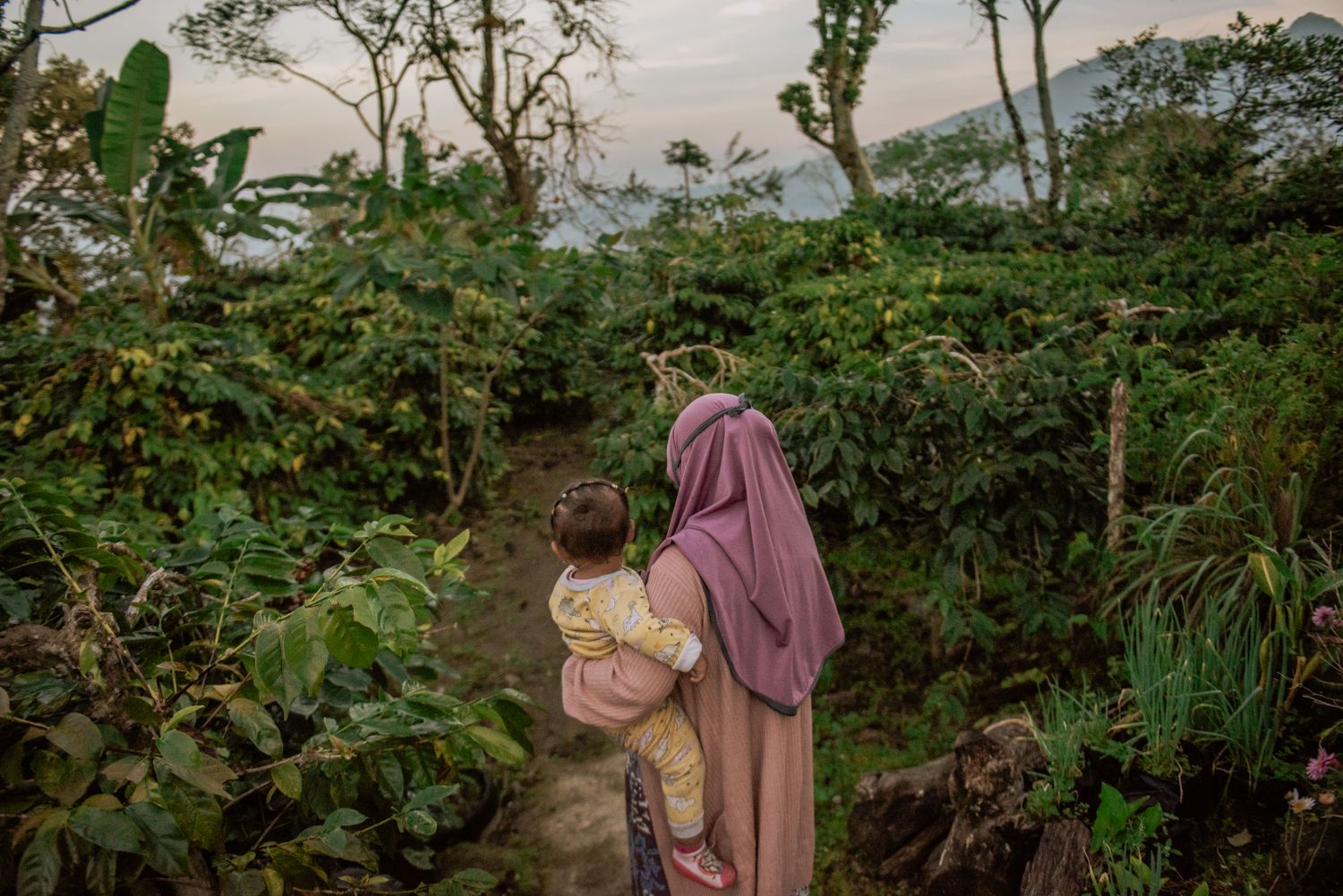
Ine Kewe: The Mother of Gayo Arabica Coffee
BY RISKA MUNAWARAH
In the Gayo highlands, coffee is often described as a mother, one that sustains families and shapes daily life. Gayo Arabica is recognized as one of the world’s finest coffees, with global demand rising sharply between 2020 and 2025, particularly from markets in the United States and Europe. Yet climate change is disrupting the conditions that make this coffee possible. Rising temperatures and shifting seasons have begun to reduce productivity, threatening a livelihood that has endured for generations.
As yields decline, pressure on the surrounding landscape increases. Limited options for adaptation, combined with weak land governance, have contributed to ongoing forest loss. Data from the Aceh Forestry and Environment Foundation shows the loss of 3,342 hectares of forest cover in Central Aceh in 2021. This loss has reduced the land’s ability to regulate temperature, water, and soil conditions essential for coffee to grow.
The consequences are increasingly visible. In December 2025, Tropical Cyclone Sinyar triggered flash floods and landslides that destroyed coffee gardens and damaged roads and bridges, cutting off access to markets. What appears as a change in production numbers reflects a deeper transformation of landscapes and livelihoods. As global demand for Arabica coffee continues, the future of Gayo coffee depends on how land, forests, and farming communities are protected.
WHAT ARE YOUR HOPES AND FEARS AS A YOUNG PERSON IN A TIME OF ECOLOGICAL CRISIS?
As a young person living and working in Aceh, I see the ecological crisis not as something distant, but as something increasingly present in everyday life. Through my work as a documentary photographer, I meet farmers and communities directly affected by climate change—from changing rainfall patterns and declining coffee production to floods and landslides that disrupt their lives. I hope we can change the way we treat nature and build a more balanced relationship with it, while ensuring that communities who depend on the land are not left behind. I fear that environmental damage will become increasingly difficult to reverse, and that future generations will bear the consequences of decisions made today. From policymakers, I hope for policies that genuinely prioritize the environment and local communities over short-term economic interests. The voices of farmers and communities living closest to nature must be heard in decision-making. As an individual, I contribute through my photography by documenting environmental changes and their impact on people’s lives. I try not only to show environmental damage, but also people’s relationship with the land, their losses, resilience, and hopes. For me, art can make a large and abstract issue feel closer and more human. Photography can amplify voices that are often overlooked, create conversations, and remind us that the ecological crisis is not only about a changing environment, but about human lives changing with it.