The Gas Works
BY SAMUEL BIRD
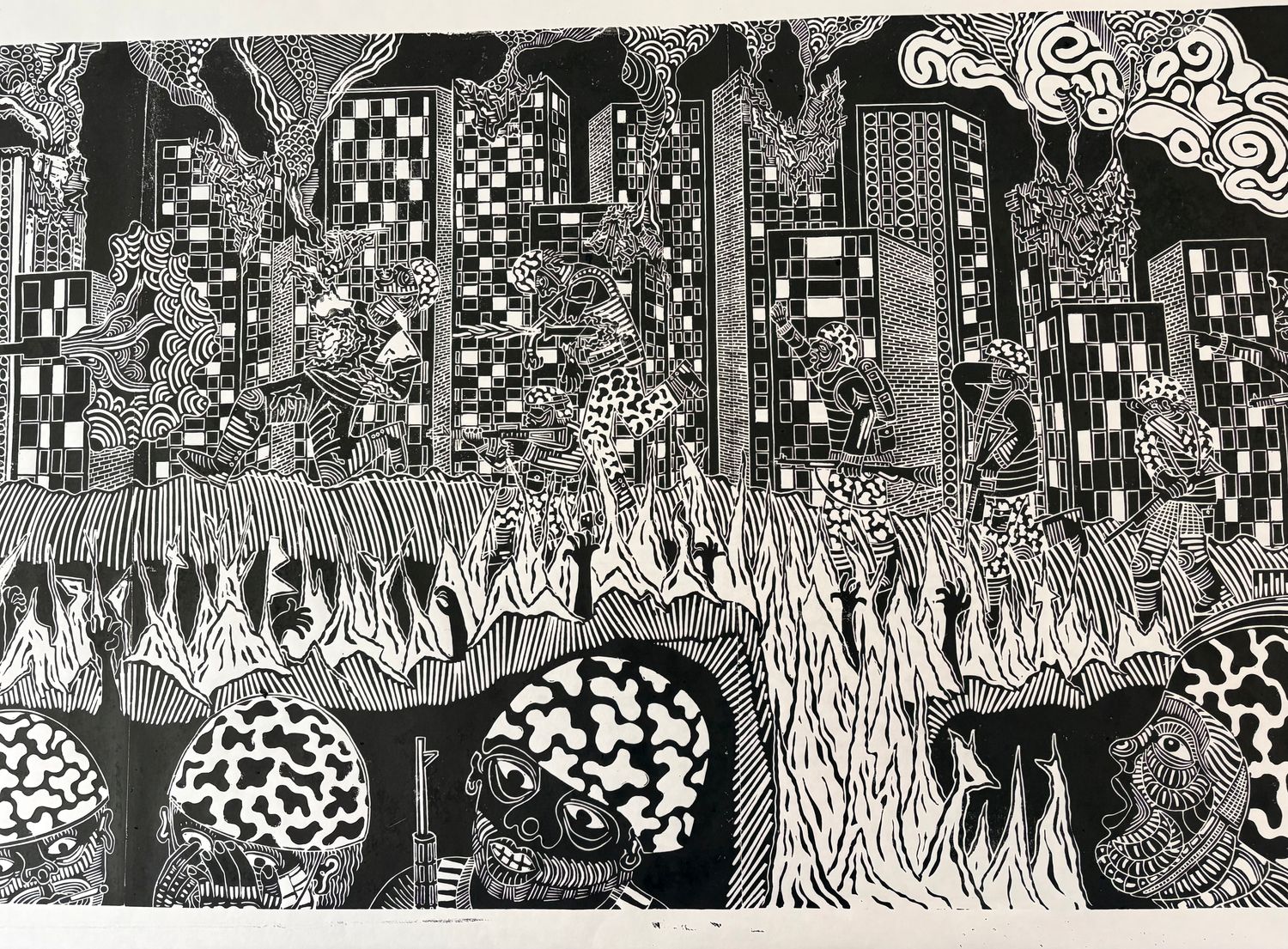
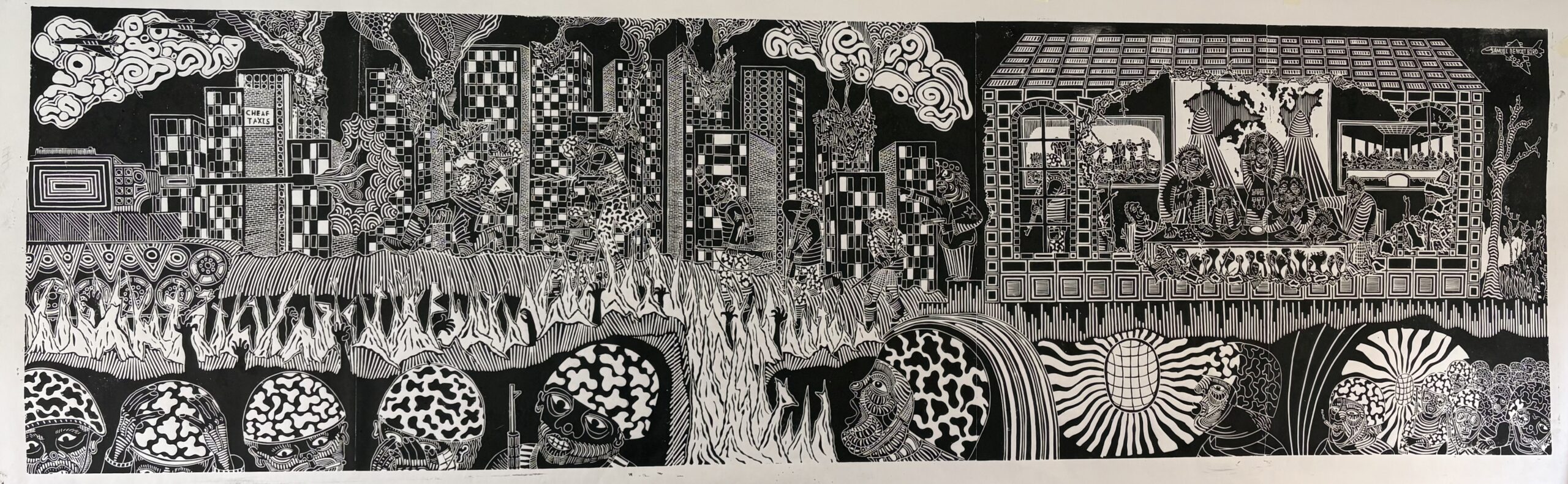
My 2.1-metre-long print is the final piece in a trilogy of lino prints, exploring the consequences of political power being placed in the wrong hands, resulting in conflict, human suffering and environmental destruction. It shows the same city deteriorating from political tension & social unrest, eventually resulting in war.
I wanted to highlight the major impact war has on the climate. Military emissions are one of the least regulated & least reported sources of greenhouse gases. Not only does the production & use of military equipment impact the planet’s resources, but it’s also used to destroy landscapes & cities, causing countless damage to the environment. Wars significantly worsen climate change by generating 5.5% of global greenhouse gas emissions, destroying ecosystems & disrupting climate action, with militaries collectively ranking as the world’s fourth largest emitter.
I took inspiration from the Bayeux tapestry for my print, starting with the dramatic battle between man & tank. Behind you can see the bombed buildings & the smoke rising into the atmosphere, producing polluted clouds in the sky above the city. You can also see the spiked, rugged, contorted land that separates the battle scene from the trench of terrified soldiers. A forest of dead trees seen on the far right highlights the effect of war on the natural landscape.
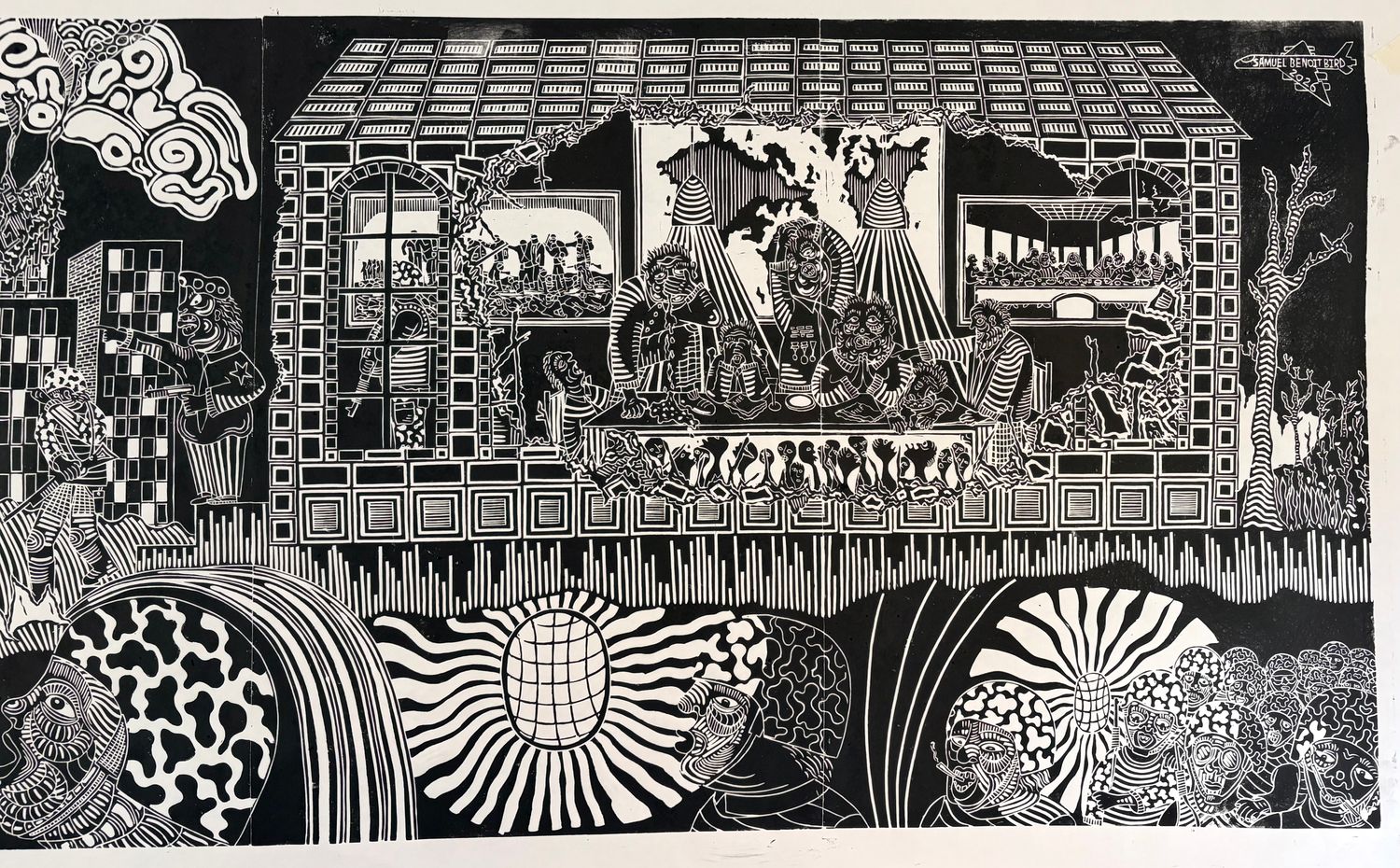
The building houses those in charge: the officers, the politicians & the frauds. Inside, they can be seen frantically trying to cover up their actions by hiding their files. The table is empty of food and drink, caused by the disrupted food chain. The symbolic victims of war can be seen underneath the table, trying to get every last ounce of blood & vomit from those in power, as they are sucking the world dry of its natural resources.
Hanging on the wall behind, an intentionally back-to-front world map symbolises the chaos. The two paintings, either side of the world map are The Last Supper and Gassed, by John Singer Sargent.
The comparison is ironic, as those in power are fighting for their last moments while being compared to The Last Supper. Highlighting how some wars are caused by religion, resulting in environmental and human destruction.
I believe linocut is the perfect medium to express the damage war causes to the environment, people and the natural world. Linocut naturally produces a very graphic, strong & raw result. Along with its 2.1 metre length, it visually shows a narrative of the impact of war on our planet.
WHAT ARE YOUR HOPES AND FEARS AS A YOUNG PERSON IN A TIME OF ECOLOGICAL CRISIS?
As a young person in a time of ecological crisis, I find it incredibly disappointing, frustrating and unjust that most major countries sometimes spend up to 30 times more on military spending compared to environmental finance. This shows how most countries are continuing to overspend on what ultimately creates death, suffering and environmental damage, which impacts the whole planet, not just the localised area of conflict. Countries are not required to disclose military-based emissions under the Paris Agreement, making them one of the least regulated and reported sources of greenhouse gases. Not only do military operations harm the planet and the people, but the devastating aftereffects continue to cause major environmental issues. The rebuilding of destroyed cities creates further CO2 from the major use of concrete and other building materials. I would hope in a dream world for countries to reduce their military-based emissions and create regulations around the use of particularly environmentally damaging materials. I fear that the majority of countries will not prioritise environmental spending over military spending. My art highlights an area of environmental damage that often doesn’t get the same attention as others. I take a keen interest and hope that, through my art, it helps highlight the everlasting conflicts currently happening around the world, showing how war doesn’t just impact the war zone; it causes a lasting impact on the planet.